HAMAMATSU C-4742-98 Orca Camera C4742-98
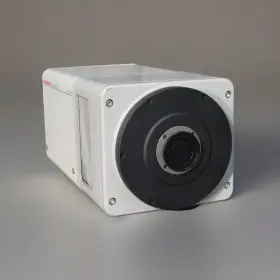
( Brand: Hamamatsu ), ( Part Type: Camera ), ( Manufacturer Part Number: C-4742-98 ), ( Country/region Of Manufacture: Japan )
Review HAMAMATSU Orca Camera
The Hamamatsu C4742-98 ORCA (Optical Ray Carrier Assemblies) camera is a high-performance, versatile, and advanced charge-coupled device (CCD) that is widely used in various scientific research applications, particularly in the field of life sciences and biotechnology. This CCD camera is designed to deliver high-sensitivity, high-resolution, and high-speed image acquisition in applications such as fluorescence microscopy, confocal microscopy, and super-resolution microscopy.
The Hamamatsu C4742-98 ORCA camera features a back-illuminated, full-frame CCD sensor with an active area of 47.68 mm x 38.41 mm, resulting in a pixel size of 13.5 m x 13.5 m. This large sensor size ensures excellent light sensitivity and low read noise, enabling the camera to capture high-quality images even in low-light conditions. The camera is capable of delivering a maximum resolution of 3680 x 2768 pixels and a maximum frame rate of up to 50 frames per second.
The Hamamatsu C4742-98 ORCA camera is also equipped with several features to improve image quality, such as on-chip binning, which allows the user to combine adjacent pixels to increase sensitivity and reduce noise. The camera also supports various gain and readout modes, enabling users to optimize the camera settings for specific applications.
Additionally, the Hamamatsu C4742-98 ORCA camera comes with a versatile and user-friendly ROI (region of interest) function, allowing users to select specific areas of the frame for image acquisition, reducing the amount of data to be processed and improving the camera's speed.
The camera is able to be controlled via several software packages, including Hamamatsu ORCA-Fluor software, IRBIS software, or a custom-designed software interface to ensure compatibility with a wide range of microscopy platforms. The ORCA camera comes with a USB 3.0 interface, enabling fast and reliable data transfer to a computer for further processing and analysis.
In summary, the Hamamatsu C4742-98 ORCA camera is a powerful and versatile CCD camera designed for high-sensitivity, high-resolution, and high-speed image acquisition in various scientific research applications. It features a large, back-illuminated CCD sensor, several gain and readout modes, on-chip binning, and a user-friendly ROI function. The camera is compatible with several software packages and supports fast data transfer via a USB 3.0 interface.
The Hamamatsu C4742-98 ORCA (Outlined Scintillation Imaging System) is a high-performance, large-format photomultiplier tube (PMT) based imaging system widely used in various research fields such as life sciences, materials science, and nuclear physics. Here are some pros and cons that may help in deciding whether to invest in this imaging system:
Pros:1. High sensitivity: The ORCA system offers extraordinary high sensitivity, allowing detection of weak signals or low-light conditions.
2. Large format: With its large format of 36 mm x 36 mm, it can capture larger images than other systems, offering more comprehensive data.
3. Versatility: ORCA is suitable for various applications, including fluorescence microscopy, bioluminescence imaging, and phosphor imaging.
4. Low noise: The system is known for its low noise level, which is crucial for generating high-quality images.
5. Excellent dynamic range: ORCA can effectively handle both bright and dark images due to its broad dynamic range.
6. Easy to use: The ORCA system comes with user-friendly software, making it simpler to analyze and process images.
7. Robust design: Hamamatsu is known for its reliable and robust design, ensuring durability and long-term usage.
Cons:1. Price: The ORCA system is quite expensive, making it a notable investment for laboratories or research institutions.
2. Complex setup: Setting up the ORCA system may require some technical expertise and time due to multiple components involved.
3. Space requirement: The large format and high-performance nature of the ORCA system mean it requires a considerable amount of bench space.
4. Power consumption: The system consumes a significant amount of power, which translates to higher energy costs.
5. Possibility of photobleaching: In certain applications, prolonged exposure to the ORCA system's light source can result in photobleaching, leading to a decrease in fluorescence intensity.
In conclusion, the Hamamatsu C4742-98 ORCA system is a valuable tool for researchers and laboratories requiring high-sensitivity, large-format imaging capabilities. Its low noise, broad dynamic range, and excellent image quality make it a go-to choice for various applications. However, the significant investment, complex setup, and power consumption might be a hindrance for some. Ultimately, potential buyers should carefully weigh the benefits and limitations of the ORCA system to determine if it is the right investment for their specific research needs.
Based on the provided information, the recommendation would be for laboratories or research institutions undertaking projects that necessitate high-quality, high-sensitivity imaging, such as fluorescence microscopy, bioluminescence imaging, or others requiring a large format and broad dynamic range. These organizations could definitively consider investing in the Hamamatsu C4742-98 ORCA system, given the advantages it offers for generating comprehensive data while handling both bright and dark images effectively.
Details:
Camera controller is not included. Good working HAMAMATSU C4742-98 ORCA II Digital Camera, with Control Cable. Also includes original package with instructions and various floppy drives driver software.
part #: c474298 prices
- $299.99-$1600.00
specifications detectoimage:
- brand: Hamamatsu
- part type: Camera
- manufacturer part number: C-4742-98
- country/region of manufacture: Japan
seller detectoimage:
- city: San Diego, California
- # reviews: 331
- rating: 100.0%
payments detectoimage:
- other
- credit card: Diners-club
- wallet: Paypal
offer detectoimage:
- quantity: 1
- started: February 6, 2025
- sold: 0
- availability: In Stock
- options: Ship-to-home
shipping detectoimage:
- type: Calculated
- carrier: UPS
- transit: 4-8 Days
- cost: $52.43
- class: Standard
- service: UPS Ground
general detectoimage:
- Test, Measurement Inspection > Cameras Imaging > Other Cameras Imaging
- condition: Used
returns detectoimage:
- time: 30 Days
- paid by: Buyer
- method: Money back
- policy: Returns Accepted
Hamamatsu C-4742-98 Is Similar To:
- Hamamatsu C472 Digital Camera C4742-98-24erg C472-98 (52.6% similar) Once the packages leave USA. It might have a considerable amount of scratches, scuffs, residue, or signs usage. Products used in foreign outlet's without proper use of a voltage adapter/converter will not be covered. For offer-style listings. It does not come with a retail box/power...(July 13th, 2024)
- Hamamatsu C9300-221 Cable Ccd Camera Demo Cord (51.7% similar) ...(September 19th, 2024)
- Hamamatsu C2400-07 Photonics Head Camera (55.4% similar) Untested - no way for me to test. There was what looks like lamination on the edge of lens but not quite. Another one of these I have looks similar, might be the metal and some bonding material...(November 13th, 2024)
- Hamamatsu C4334-01 Streak Scope Camera (61.7% similar) Used with normal wear, from government surplus...(January 29th, 2025)
- Hamamatsu C8779a-01 Ccd Vra Fine Camera S8769a Nikon Precision Nsr Working (42.7% similar) Pictured test equipment is not included or available for sale. Item condition: working, 90 day warranty. Removed from a Nikon NR series system. Sale details. Made in japan this item is working surplus. Model no: S8769A. The physical condition is good, but there are signs of previous use...(February 11th, 2025)
- Hamamatsu C8779k Ccd Vra Fine Camera S8769k Nikon Precision Nsr Series Working (41.3% similar) Pictured test equipment is not included or available for sale. Hamamatsu C8779K CDC Vera fine camera S8769K Nikon precision NR series working. Sale details. Made in japan this item is working surplus. Only items pictured are included: if a part is not pictured, or mentioned above, then it...(February 11th, 2025)
- Hamamatsu C3077-70 Ccd Camera Assembly From Fdss-7000 With Warranty (41.8% similar) 30 day return warranty. Shipping and handling. As-is items are sold without warranty...(April 4th, 2025)
- Hamamatsu C11440-22c Digital Camera C11440 Orca-flash4.0 C11440-22c Setup Lvp21 (40.7% similar) Acquired from a reliable source. No means to test.: comes as shown. Includes orca-flash 4.0 C11440-22C digital camera, oem power supply, camera link computer input module, and cables. Used items have a 30-DAY return. Very clean, like new!.: high cost, high value...(April 10th, 2025)
- Hamamatsu C4880-80 Multi-format Ccd Camera Controller With (45.5% similar) Includes: 1 C4880-80 camera controller, part number: C4880-85 CDC camera, DB9 to cable, 6.5FT daub 50-PIN 16.5 ft 49-PIN centurions 68-PIN...(April 28th, 2025)
- Hamamatsu C2400-77ah Ccd Camera (62.2% similar) Part #: Hamamatsu C2400-77AH for sale...(April 28th, 2025)
- Hamamatsu C9100-51 Em-ccd Digital Camera (57.8% similar) Unit is missing c-mount...(May 2nd, 2025)

5 offers $299.99–$1600.00 USD
- Used. Offer #1 priced at $1600.00 + $30.00 delivery = $1630.00* total. With its advanced features and reliable performance, this camera controller is essential for achieving accurate and consistent results in the field of healthcare, lab, and dental applications. The Hamamatsu Camera Controller ORCA II ERG -24ERG is a high-quality camera control system designed for use in biological laboratories.+$30.00 shipping
- Used. Offer #2 priced at $299.99 + $45.00 delivery = $344.99* total. +$45.00 shipping
- Used. Offer #3 priced at $1495.00 + $19.17 delivery = $1514.17* total. The connector appears to be a high-density 50-pin style interface connection commonly used on scientific imaging systems and laboratory hardware. Hamamatsu is well known for producing premium scientific imaging hardware used in universities, biotech labs, and industrial imaging systems.+$19.17 shipping
- Used. Offer #4 priced at $360.00 + $0.00 delivery = $360.00* total. FREE SHIPPING
- Used. Offer #5 priced at $173.00 + $73.05 delivery = $246.05* total. Hamamatsu ORCA-ER Camera Controller Model -24ERG.+$73.05 shipping